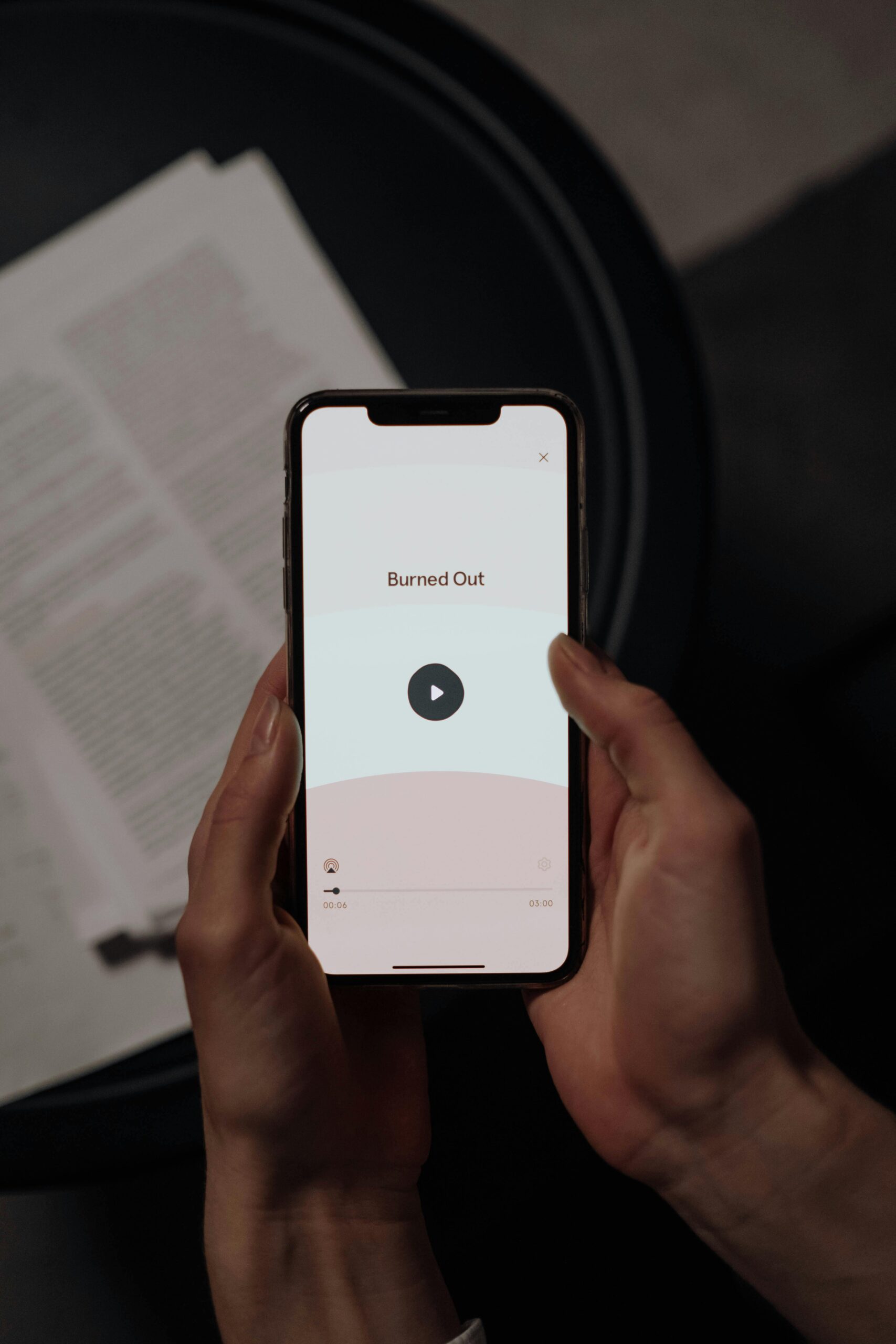
Best Apps to Reduce Stress & Anxiety in 2026
5 Best Apps to Reduce office Stress & Anxiety in 2026
Managing stress and anxiety is essential in today’s fast-paced world. Thankfully, modern apps make it easier to stay calm, focused, and mentally healthy.
Here are the best mental health apps for stress and anxiety in 2026.

Modern stress isn’t just “feeling busy”—it’s a full nervous-system overload problem. The good news is that today’s mental wellness apps are backed by neuroscience, CBT research, and behavioral psychology.
Daily use that produces measurable stress reduction
Here’s the truth nobody tells you: most stress-relief apps are glorified playlists with a meditation accent. They feel good. They change almost nothing. The apps that actually move the needle are built on specific neurological mechanisms — CBT, biofeedback, parasympathetic activation — not vibes.
A 2025 meta-analysis in npj Digital Medicine reviewed 19 randomised controlled trials and found app-based CBT produces statistically significant anxiety reductions. The key word is specific: the app must match your stress mechanism. A breathing app won’t fix chronic overwork. Knowing the difference is everything.
Below are the top apps that actually help rewire stress responses.
1. Headspace — Train Your Brain to Handle Stress
Headspace has evolved beyond a meditation timer. In 2026 it features Ebb, an AI companion that checks in daily, adapts sessions to your emotional state, and nudges you when you’ve gone quiet. Its anxiety-specific courses teach you to observe anxious thoughts without fusing with them — a core principle of mindfulness-based cognitive therapy (MBCT).
The science
A 2025 RCT in Annals of Behavioral Medicine found Headspace significantly reduced subjective stress and perseverative thinking. A Georgia Tech study showed daily use boosted mindfulness, reducing anxiety ratings. UCSF researchers found employees reported lower cortisol-linked stress and reduced burnout.

Headspace has evolved beyond a meditation timer. In 2026 it features Ebb, an AI companion that checks in daily, adapts sessions to your emotional state, and nudges you when you’ve gone quiet. Its anxiety-specific courses teach you to observe anxious thoughts without fusing with them — a core principle of mindfulness-based cognitive therapy (MBCT).
🧠 Science insight:
- Reduces amygdala overactivity (fear response center)
- Improves attention regulation in prefrontal cortex
- Lowers cortisol levels with consistent practice
Why it works:
It doesn’t eliminate stress—it changes how your brain reacts to it automatically.
Best for: daily anxiety, beginners, focus issues
2. Calm — Sleep and Nervous System Reset
If your anxiety spikes the moment your head hits the pillow, Calm was built for you. Its Sleep Stories redirect anxious rumination toward gentle narrative imagery. Breathing exercises activate the parasympathetic nervous system, countering the fight-or-flight response that keeps you wired at 2am.


Calm focuses heavily on sleep, breathing, and parasympathetic activation.
🧠 Science insight:
- Slow breathing activates vagus nerve response
- Sleep stories reduce sleep onset time
- Relaxing audio reduces sympathetic nervous system activity
Why it works:
It shifts your body from stress mode → recovery mode.
Best for: insomnia, overthinking at night, anxiety spirals
3. Insight Timer — Largest Free Meditation Library
Insight Timer gives you 150,000+ guided meditations from psychologists, spiritual leaders, and mindfulness teachers — almost entirely free. Unlike Headspace and Calm, you’re not locked into one curriculum. It’s the Netflix of meditation: eclectic, abundant, and oddly comforting.


Insight Timer provides thousands of guided meditations from therapists, teachers, and neuroscientists.
🧠 Science insight:
- Habit consistency is key to neuroplasticity
- Group meditation reduces perceived stress and isolation
- Gratitude-based meditations increase dopamine regulation
Why it works:
More variety = higher consistency = stronger long-term results.
Best for: free users, variety seekers, long-term practice
4. Waking Up — Deep Awareness Training
“Waking Up” is a guided awareness training app designed to help you develop clarity, presence, and deeper understanding of your mind.
In a world filled with constant distraction, most of our attention is pulled into thoughts, reactions, and external noise. This app helps you gently return to what is always present—your awareness in this very moment.
Through simple daily practices, guided reflections, and mindful exercises, you’ll learn how to observe your thoughts instead of getting lost in them, recognize emotional patterns as they arise, and create space between stimulus and response.
This is not about changing who you are. It is about becoming more aware of what is already happening within you—moment by moment.
With consistent practice, you begin to experience life with greater calmness, clarity, and inner stability.


Waking Up focuses on deep cognitive awareness and thought observation.
🧠 Science insight:
- Reduces rumination through decentering techniques
- Improves metacognitive awareness (thinking about thinking)
- Supports long-term anxiety disorder management
Why it works:
You learn to observe thoughts instead of reacting to them.
Best for: deep thinkers, existential anxiety, advanced users
5. Finch — Self-Care Through Gamification
Finch is a self-care and mental wellness app that turns personal growth into a motivating, game-like experience. Instead of treating self-improvement as a chore, Finch encourages users to build healthy habits through gentle rewards, progression systems, and a supportive virtual companion.
At the heart of the app is your Finch pet—a customizable digital bird that grows and evolves as you complete daily self-care activities. These activities can include mood check-ins, journaling, breathing exercises, gratitude practice, hydration, and other small wellness goals.
Each completed task helps your Finch go on adventures, gain energy, and unlock new items, while also helping you build consistency in caring for your own mental and emotional well-being.
Finch is designed to make self-care feel approachable rather than overwhelming. It focuses on small, achievable actions that gradually build into meaningful lifestyle habits. By combining psychology-based wellness tools with playful gamification, the app helps users stay engaged without pressure or judgment.
Whether you’re working on mindfulness, emotional resilience, or simply trying to build healthier routines, Finch transforms self-care into something encouraging, interactive, and sustainable


Finch turns mental health into a friendly daily habit system using gamification.
🧠 Science insight:
- Behavioral activation reduces avoidance patterns
- Gamification increases dopamine-driven motivation
- Micro-goals reduce cognitive overload in anxiety
Why it works:
Small actions → reward loop → consistent mental health habits.
Best for: low motivation, depression-linked anxiety, habit building
👉 Click below for all the links for apps:
🧠 1. Headspace
Headspace
Official website:
Visit Headspace
🌿 2. Calm
Calm
Official website:
Visit Calm
🧘 3. Insight Timer
Insight Timer
Official website:
Visit Insight Timer
🧠 4. Waking Up
Waking Up
Official website:
Visit Waking Up
🌱 5. Finch (Self-care / mental wellness app)
Finch
Official website:
Visit Finch
🧠 Final Science Takeaway
All these apps work through three core psychological systems:
- Neuroplasticity → your brain rewires with repetition
- Nervous system regulation → breathing + mindfulness reduce stress response
- Cognitive reframing → changing how thoughts are interpreted
🌿 Bottom Line
Stress isn’t removed—it’s regulated.
These apps don’t silence your mind.
They teach your mind how to stop amplifying fear signals unnecessarily.
Stress isn’t something you defeat. It’s something you learn to retrain your response to.
Your brain isn’t trying to hurt you—it’s trying to protect you in a world that moves too fast.
These apps don’t remove stress.
They help you build one critical skill:
Not every thought deserves a reaction.
And that single skill changes everything.