How Desk Time Is warning of Jeopardizing Your Body
Office Employees: How Sitting for Long Hours Is Silently Damaging Your Body and Mental Health — And Why Squats May Be the Simple Fix No Doctor want to share it.
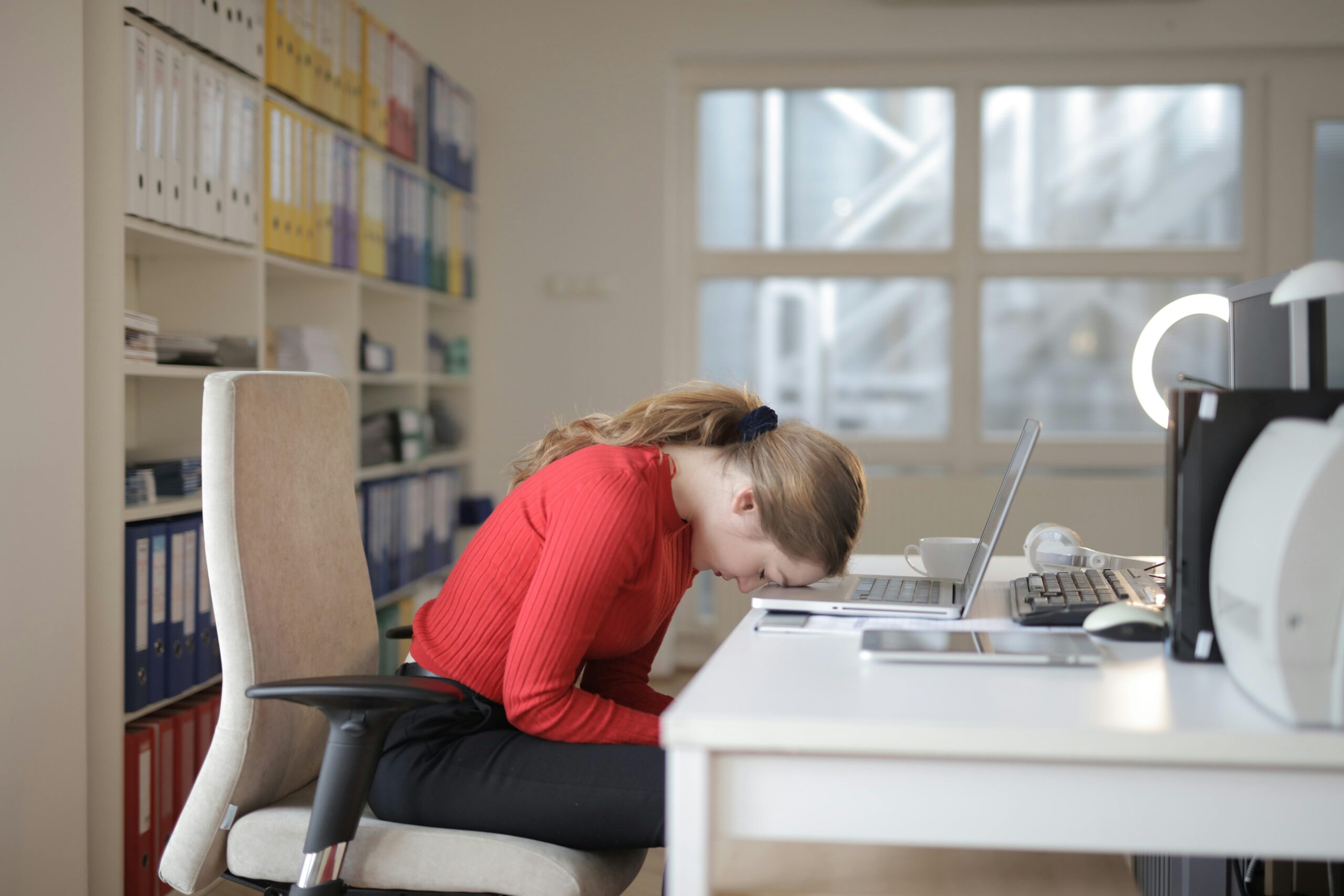
Modern office life may look comfortable, but sitting for 8–10 hours every day is quietly creating serious physical and mental health problems. The human body was designed to move, stretch, walk, bend, and stay active throughout the day — not remain in one position for hours.
Unfortunately, many office employees spend most of their lives sitting at desks, commuting, attending meetings, and using screens. Over time, this inactive lifestyle slowly weakens the body and affects mental well-being in ways many people don’t realize until symptoms begin appearing.

Here are some of the biggest problems caused by prolonged sitting and sedentary office lifestyles.
1. Chronic Lower Back Pain
Lower back pain has become one of the most common complaints among office workers.
When you sit for long periods, the muscles supporting the spine become weak and tight. Poor posture places extra pressure on the lower back discs and spinal joints. Over time, this creates stiffness, discomfort, and constant pain.
Many people ignore the early warning signs:
- Tightness after sitting
- Pain while standing up
- Morning stiffness
- Discomfort during long drives
But slowly, the pain becomes part of daily life.
Weak core muscles and inactive glutes make the problem even worse because the lower back starts doing extra work that other muscles should handle.
2. Weak Legs and Muscle Loss
The body follows a simple rule: “Use it or lose it.”
When office employees sit all day, the leg muscles remain inactive for hours. Over time:
- Thigh muscles weaken
- Glutes become inactive
- Calf muscles tighten
- Overall lower-body strength decreases
This is why many people feel exhausted after climbing stairs or walking for long periods even at a young age.
Muscle weakness also affects balance, mobility, and joint support. The weaker the muscles become, the more pressure falls on the knees and spine.
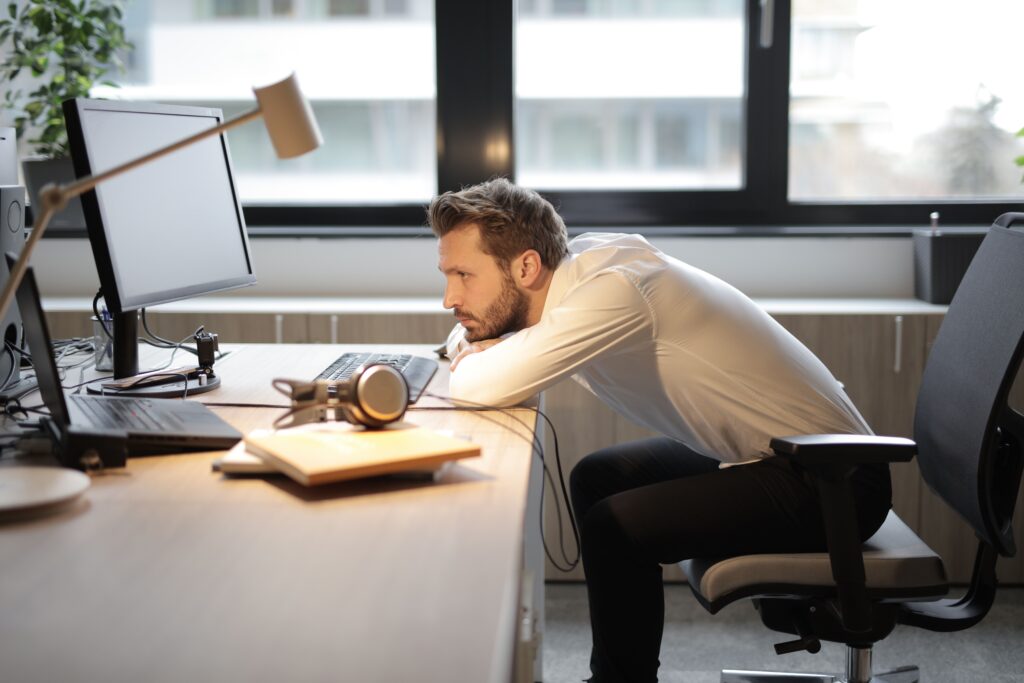
3. Poor Posture and Rounded Shoulders
Office work often forces the body into unhealthy positions:
- Leaning toward screens
- Looking down at phones
- Slouching in chairs
- Sitting without back support
Over time, the body adapts to this posture.
This leads to:
- Rounded shoulders
- Neck pain
- Forward head posture
- Tight chest muscles
- Weak upper back muscles
Poor posture not only affects appearance but also impacts breathing, confidence, and energy levels.
Many people don’t realize that constant fatigue can partly come from poor posture restricting proper oxygen flow.
4. Tight Hips and Reduced Mobility
Sitting keeps the hips locked in one position for hours.
This causes the hip flexor muscles to tighten and shorten. As mobility decreases, simple movements become uncomfortable:
- Bending
- Squatting
- Walking quickly
- Getting up from the floor
Over time, reduced mobility increases injury risk and accelerates physical aging.
This is one reason older generations who moved more naturally often maintained better flexibility and joint health than today’s younger office workers.
5. Weight Gain and Slow Metabolism
Sitting for long hours dramatically reduces daily calorie burn.
When movement decreases:
- Metabolism slows down
- Fat storage increases
- Belly fat accumulates more easily
- Energy levels drop
Office employees often combine sitting with:
- Stress eating
- Sugary drinks
- Lack of sleep
- Irregular meal timing
This creates a cycle of weight gain and low energy.
The body begins storing excess calories because it isn’t moving enough to use them efficiently.
6. Constant Fatigue and Low Energy
One of the most frustrating effects of office life is feeling tired all the time.
Ironically, sitting too much can actually make the body feel more exhausted.
Lack of movement reduces:
- Blood circulation
- Oxygen flow
- Muscle activation
- Natural energy production
Many office employees depend heavily on:
- Coffee
- Energy drinks
- Sugar
- Excessive screen stimulation
But these only temporarily mask the problem.
The real issue is that the body becomes physically inactive for most of the day.
7. Increased Stress and Mental Burnout
Office work doesn’t only affect the body — it strongly impacts mental health too.
Long hours of:
- Deadlines
- Meetings
- Screen exposure
- Work pressure
- Lack of sunlight
- Minimal physical movement
can overload the brain and nervous system.
This often leads to:
- Stress
- Irritability
- Anxiety
- Brain fog
- Mental exhaustion
Movement plays a major role in emotional balance. When the body moves, stress hormones reduce and mood-improving chemicals increase naturally.
Without movement, stress tends to stay trapped inside the body.
8. Poor Blood Circulation
Sitting for long periods slows blood flow, especially in the lower body.
Poor circulation can cause:
- Swollen feet
- Numb legs
- Tingling sensations
- Cold feet
- Muscle stiffness
In severe cases, prolonged inactivity may increase the risk of serious circulation-related problems.
Regular movement helps the heart pump blood more effectively throughout the body.
9. Reduced Mental Focus and Brain Fog
Many office workers notice that after several hours of sitting, concentration becomes difficult.
This happens because:
- Blood circulation decreases
- The brain receives less oxygen
- Mental fatigue builds up
- Stress hormones increase
As a result, people may experience:
- Forgetfulness
- Reduced productivity
- Difficulty concentrating
- Low motivation
Short movement breaks during the day can significantly improve mental clarity and focus.
10. Poor Sleep Quality
Sedentary lifestyles often disrupt natural sleep patterns.
When the body remains inactive all day, it may not feel physically tired enough for deep restorative sleep.
Stress and screen exposure make the problem even worse.
Poor sleep creates additional problems:
- Low energy
- Weight gain
- Mood swings
- Reduced recovery
- Poor concentration
This becomes a harmful cycle that affects both physical and mental health.
SQUATS – The Ultimate Saver – Most simple and effective way to improve our body and mind
Squats are one of the most powerful exercises you can add to your fitness routine. They strengthen your legs, improve mobility, tone your glutes, and even help build mental discipline. But what actually happens when you squat every single day?
A popular fitness experiment explored exactly that — performing squats daily for an entire month. The results were surprising, motivating, and packed with lessons for anyone trying to improve their health naturally.
In this article, we’ll break down the physical, mental, and lifestyle changes that can happen when you squat every day, along with tips to do it safely and effectively.

Why Squats Are Considered the “King of Exercises”
Squats are a compound movement, meaning they work multiple muscle groups at the same time. Unlike isolated exercises, squats activate:
- Quadriceps
- Hamstrings
- Glutes
- Core muscles
- Lower back
- Calves
Because of this, squats improve both strength and functionality. Everyday movements like sitting, climbing stairs, bending, and lifting become easier when your lower body is strong.
Another reason squats are so effective is that they require no equipment. You can do them anywhere — at home, in a gym, or even during a short work break.
There was a time when people could comfortably sit in a deep squat position for several minutes without pain, discomfort, or struggle. Our grandparents cooked, cleaned, worked, rested, and even socialized in this natural human position daily. They didn’t need expensive mobility programs, posture correctors, ergonomic chairs, or physiotherapy videos to teach them how to move properly.
Their bodies stayed mobile because movement was naturally part of life.
Today, most office employees cannot even stay in a deep squat for 20 seconds.
The moment they try:
- Heels lift off the ground
- Knees hurt
- Lower back tightens
- Ankles feel locked
- Balance disappears
- The body starts shaking
What changed?
The answer is simple: modern sitting lifestyles slowly disconnected the body from one of its most natural resting positions.
Humans were designed to squat.
In many cultures around the world, deep squatting is still used naturally for:
- Resting
- Eating
- Gardening
- Cooking
- Using toilets
- Working close to the ground
Children can squat perfectly without training because the human body naturally understands this position. But after years of office chairs, car seats, couches, and screen-based lifestyles, most adults completely lose this movement pattern.
And the scary part is this:
Losing the ability to squat deeply is often one of the earliest signs that the body is becoming stiff, weak, and physically disconnected.
The deep squat position quietly reveals how healthy your body really is.
If sitting in a squat feels impossible, your body may already be dealing with:
- Tight hips
- Weak glutes
- Poor ankle mobility
- Weak core muscles
- Lower back stiffness
- Bad posture
- Reduced balance
- Joint weakness
Most people think these problems only happen during old age.
But now, office employees in their 20s and 30s are already experiencing:
- Back pain after work
- Knee discomfort while climbing stairs
- Tight hips from prolonged sitting
- Constant stiffness
- Poor flexibility
- Low energy levels
- Mental fatigue
The body slowly adapts to whatever position it spends the most time in.
If you sit in a chair for 8–10 hours daily, your muscles begin shortening and weakening. Hips become tight. Ankles lose mobility. The spine becomes stiff. The glutes become inactive.
Over time, the body forgets how to move naturally.
This is why many people feel “old” much earlier than previous generations.
The deep squat is not just an exercise.
It is a powerful mobility test.
A healthy squat position requires:
- Flexible ankles
- Mobile hips
- Strong knees
- Stable core muscles
- Proper spinal alignment
- Good balance
When even one of these areas becomes weak, the squat becomes difficult.
That’s why struggling to squat deeply often reveals hidden problems inside the body long before serious pain begins.
And this doesn’t only affect physical health.
Long hours of sitting and poor mobility also affect mental well-being.
When the body remains inactive for most of the day:
- Blood circulation slows
- Energy drops
- Stress increases
- Mental fatigue builds up
- Focus decreases
- Mood becomes unstable
Movement directly affects the brain.
This is why people often feel mentally refreshed after stretching, walking, or moving naturally.
The body and mind are deeply connected.
The good news is that the body can relearn movement surprisingly fast.
Many people notice improvements simply by practicing deep squat sitting for a few minutes daily.
At first, the position may feel uncomfortable or unstable.
That’s normal.
Your body is slowly trying to regain mobility that years of sitting removed.
Over time, regular squat sitting may help:
- Improve hip mobility
- Reduce stiffness
- Strengthen legs naturally
- Improve posture
- Activate weak glutes
- Support spinal health
- Increase flexibility
- Improve balance
- Reduce body tightness from sitting
More importantly, it reconnects the body to a movement humans were naturally designed to do.
Sometimes the biggest health problems don’t come from lack of medicine.
They come from lack of movement.
Modern office life made sitting in chairs normal — but the human body was never designed to stay there all day.
And maybe that’s why one simple natural position now feels impossible for millions of people.
Your Body Was Designed to Squat — Office Life Is Slowly Destroying That Ability
Take a moment and try something simple.
Drop into a deep squat.
Not a gym squat.
Not an exercise rep.
Just a natural resting squat — heels down, hips low, relaxed.
Now notice what happens.
Do your ankles feel tight?
Do your knees start hurting?
Does your lower back scream within seconds?
Do you lose balance and fall backward?
If yes, your body may already be showing the hidden damage caused by modern office life.
And here’s the scary part…
Most people think this is completely normal.
It’s not.
Look at small children.
Without training, without yoga classes, without mobility exercises — they naturally sit in a perfect deep squat. It’s one of the most natural human positions.
Our grandparents did it too.
They squatted while cooking.
While farming.
While washing clothes.
While talking.
While resting.
They didn’t spend their lives trapped in office chairs, cars, couches, and screens.
Their bodies stayed mobile because movement was part of daily life.
But modern lifestyles changed everything.
Today, most office employees spend:
- 8+ hours sitting at work
- Hours driving
- Hours scrolling phones
- Hours sitting at home again
The body adapts to whatever position it spends the most time in.
And unfortunately… most people now live in a seated position.
The Silent Damage Begins Earlier Than You Think
Most people believe stiffness, pain, and poor mobility only happen during old age.
But office workers in their 20s and 30s are already experiencing:
- Tight hips
- Weak knees
- Back pain
- Poor posture
- Low energy
- Neck stiffness
- Mental fatigue
- Reduced flexibility
Not because they are “old.”
Because their body stopped moving naturally.
The deep squat position exposes these problems immediately.
Your body starts revealing everything it has been hiding.
Why Is the Deep Squat So Difficult Now?
Because sitting in chairs slowly disconnects your body from natural movement.
When you sit all day:
- Hips become tight
- Ankles lose mobility
- Glutes stop activating
- Core muscles weaken
- Spine becomes compressed
Over time, your body literally forgets how to squat.
That’s why many people feel:
- Shaky while squatting
- Pressure in the knees
- Tightness in the ankles
- Lower back discomfort
- Loss of balance
Your body isn’t broken.
It’s just deconditioned from years of inactivity.
The Crazy Part? Your Body Can Relearn It
This is where things get interesting.
People who begin practicing deep squat sitting daily often notice dramatic changes within days.
At first, it feels uncomfortable.
Your body resists it.
Your ankles ache.
Your legs shake.
Your hips feel locked.
You’ll probably think:
“Maybe my body just can’t do this.”
But that’s exactly what most people discover before the transformation begins.
The discomfort is not failure.
It’s your body waking up.
Around Day 7, Everything Starts Changing
Something strange happens after a few consistent days.
The squat position begins feeling… easier.
Your hips start loosening.
Your ankles feel more mobile.
Your knees feel stronger.
Your posture improves naturally.
Many people even notice:
- Less lower back stiffness
- Better digestion
- More energy
- Improved balance
- Easier movement throughout the day
And suddenly, sitting in chairs starts feeling worse than squatting.
That’s when people realize something powerful:
The body craves movement.
The Mental Shift Nobody Expects
Most people think mobility only affects the body.
But long hours of sitting affect the brain too.
Office lifestyles often create:
- Brain fog
- Stress
- Mental exhaustion
- Anxiety
- Low motivation
- Poor focus
Movement changes that.
Deep squat sitting forces the body to relax naturally. Blood circulation improves. The nervous system calms down. Tension begins releasing from the hips and lower back.
Many people describe it as feeling “lighter” mentally.
Not because squatting is magic.
But because the human body functions better when it moves naturally.
By Day 30, Your Body Starts Craving the Position
This is when the transformation becomes obvious.
You stop “forcing” the squat.
Instead, your body naturally chooses it.
You begin:
- Squatting while watching TV
- Squatting while using your phone
- Squatting while waiting for food
- Squatting instead of sitting in chairs
The body begins reconnecting with a movement pattern humans evolved to use.
And this changes more than flexibility.
It changes how your body feels every day.
What Most People Don’t Realize
The deep squat is not just a mobility exercise. It’s a full-body health check.
To comfortably squat, your body needs:
- Healthy ankles
- Mobile hips
- Strong knees
- Stable core muscles
- Good posture
- Proper balance
When you lose the ability to squat naturally, it often means your body is becoming weaker, tighter, and less functional overall.
That’s why this simple position reveals so much about your health.
Maybe the Problem Isn’t Aging
Maybe the problem is that modern humans stopped moving the way humans were designed to move.
Our grandparents didn’t need complicated fitness systems to stay mobile.
Movement was built into life itself.
Today, people search for expensive solutions while spending most of their lives sitting still.
And maybe that’s why one simple natural squat position now feels impossible for millions of people around the world.
Final Thoughts
Your body is not weak because you’re getting older.
Your body is becoming stiff because it’s forgetting movement.
The deep squat reminds the body of what it was designed to do.
Not through intense workouts.
Not through punishment.
Not through complicated routines.
Just through returning to a natural human position.
Start slowly.
Hold onto support if needed.
Practice daily.
Because sometimes the smallest habits create the biggest transformations.
And maybe true health isn’t about learning something new…
Maybe it’s about remembering what the body already knew.
The First Few Days: Muscle Soreness and Fatigue
When starting daily squats, the body experiences a period of adjustment. In the first few days, soreness is extremely common, especially in the thighs and glutes.
This happens because the muscles are being challenged in ways they may not be used to. Tiny muscle fibers break down during exercise and rebuild stronger during recovery.
Some common early experiences include:
- Tight legs
- Mild fatigue
- Reduced flexibility
- Muscle stiffness
Although discomfort can feel discouraging at first, it’s actually a sign that your muscles are adapting and growing stronger.
The key during this stage is consistency without overtraining.
Week One: Improved Blood Flow and Energy
After the initial soreness fades, many people begin noticing increased energy levels and improved circulation.
Squats stimulate blood flow throughout the body and engage large muscle groups, which boosts metabolism and oxygen delivery. This can lead to:
- Better daily energy
- Improved stamina
- Reduced sluggishness
- Enhanced focus
Many people also report feeling mentally stronger because sticking to a daily challenge builds discipline and confidence.
Exercise releases endorphins — the body’s natural “feel-good” chemicals — which may help reduce stress and improve mood.
Visible Changes in the Legs and Glutes
One of the most noticeable effects of daily squats is improved muscle tone in the lower body.
As the body adapts, the glutes become firmer and the thighs appear more defined. Squats can help create:
- Stronger legs
- Better glute shape
- Improved posture
- Greater lower-body stability
While major transformations take longer than 30 days, consistent squatting can absolutely produce visible improvements.
However, results depend on several factors including:
- Nutrition
- Sleep quality
- Workout intensity
- Body type
- Overall lifestyle habits
Squats alone won’t completely transform the body overnight, but they are a powerful foundation for long-term fitness.

Core Strength and Better Posture
Many people don’t realize squats also strengthen the core.
To maintain balance during squats, the abdominal muscles and lower back stay engaged throughout the movement. Over time, this can improve posture and reduce weakness in the midsection.
Benefits may include:
- Better balance
- Reduced lower back discomfort
- Stronger abdominal support
- Improved athletic performance
Poor posture is common today because of long hours spent sitting at desks or using phones. Squats help counteract some of that weakness by strengthening the body from the ground up.
Mental Benefits of Doing Squats Every Day
Fitness challenges are not only physical — they are mental as well.
Committing to daily squats teaches consistency, self-discipline, and resilience. Even on difficult days, showing up for yourself builds confidence.
Many people experience:
- Improved motivation
- Better self-esteem
- Greater mental toughness
- Reduced stress levels
Daily habits create momentum. Once exercise becomes part of your routine, maintaining a healthier lifestyle often becomes easier overall.
The Importance of Proper Form
One of the biggest lessons from daily squatting is that technique matters.
Incorrect squat form can lead to knee pain, back strain, or muscle imbalance. Proper squatting includes:
Correct Squat Technique
- Stand with feet shoulder-width apart
- Keep your chest lifted
- Engage your core
- Push your hips back
- Lower until thighs are parallel to the floor
- Keep knees aligned with toes
- Push through your heels to stand
Good form is more important than doing a high number of repetitions.
If you are a beginner, start slowly and focus on quality movement instead of speed.
Can You Really Squat Every Day?
Yes — but recovery is important.
The body needs time to repair muscles, especially if squats are intense or weighted. Beginners may benefit from lighter daily sessions instead of heavy workouts.
To avoid overtraining:
- Stretch regularly
- Stay hydrated
- Eat enough protein
- Sleep properly
- Listen to your body
Some people alternate between bodyweight squats and heavier squat sessions to balance recovery and progress.
Common Mistakes to Avoid
If you decide to try a squat challenge, avoid these common mistakes:
1. Poor Form
Bad technique increases injury risk.
2. Doing Too Much Too Soon
Progress gradually instead of forcing high repetitions immediately.
3. Ignoring Recovery
Rest, hydration, and nutrition are essential.
4. Not Engaging the Core
A weak core can place stress on the lower back.
5. Skipping Warm-Ups
Always prepare your joints and muscles before exercising.
Final Thoughts
Squatting every day can lead to stronger legs, improved posture, better endurance, increased confidence, and greater mental discipline. While dramatic transformations don’t happen overnight, consistency creates long-term results.
The biggest takeaway from this fitness experiment is simple: small daily habits can create powerful changes over time.
If you’re looking for a simple exercise that delivers real benefits without expensive equipment, squats are one of the best places to start.
Start slow, focus on proper form, stay consistent, and your body will thank you.