Neurowellness 2026: Fix Your Stress, Sleep & Burnout | WellnessJoyful
🧠 Trending: #1 Wellness Topic of 2026
Neurowellness: The Science-Backed Way to Fix Your Stress, Sleep & Burnout — Starting Today
40% of people worldwide feel high anxiety every single day. Your dysregulated nervous system might be the real culprit — and modern science finally has the answer.
✍️ By WellnessJoyful Team📅 June 10, 2026⏱️ 12 min read🔬 Science-backed
40%of adults feel
high anxiety daily
68%of US adults stressed
every single day
230KTikTok videos on
#nervoussystemhealing
#1Global Wellness Summit
trend of 2026
📖 Estimated reading time: 12 minutes — worth every second.
You wake up exhausted despite 8 hours of sleep. You’re snapping at people you love. Your brain feels like a browser with 47 tabs open — and no matter what you do, you just can’t seem to close them. Sound familiar? You’re not lazy. You’re not broken. Your nervous system is stuck in survival mode. And in 2026, we finally know how to fix it.
📋 What you’ll learn in this article
- What is Neurowellness? (The 2026 breakthrough explained simply)
- 10 Warning Signs Your Nervous System Is Dysregulated
- The Science: Why Your Brain Gets Stuck in Fight-or-Flight
- 7 Science-Backed Techniques to Reset Your Nervous System
- AI & Tech Tools Supercharging Neurowellness in 2026
- Your Free 7-Day Nervous System Reset Plan
- FAQ: Your Most Googled Questions Answered
What Exactly Is Neurowellness — And Why Is Everyone Talking About It?
Neurowellness isn’t another wellness buzzword destined to fade by summer. It’s the first wellness trend in years that’s rooted in hard neuroscience — and it’s fundamentally changing how millions of people approach their health.
At its core, neurowellness is the practice of actively regulating your autonomic nervous system — the invisible control panel governing your heart rate, breathing, digestion, sleep, mood, and stress response — using a combination of ancient wisdom and cutting-edge technology.
For decades, we treated symptoms: anxiety medication for anxiety, sleeping pills for insomnia, antacids for stress-induced gut problems. Neurowellness treats the root cause — a nervous system that never learned how to come down from high alert.
💡 Key Insight
The Global Wellness Summit — which tracks the world’s most significant health movements — named “The Rise of Neurowellness” its #1 wellness trend for 2026. This isn’t a fad. It’s a fundamental shift in how humanity approaches health.
Think of your nervous system like a dimmer switch that controls your entire physiological state. Modern life — constant notifications, financial stress, doomscrolling, poor sleep, processed food — has jammed that switch in the “ON” position. Neurowellness is learning how to finally turn the dial back down.
10 Warning Signs Your Nervous System Is Dysregulated Right Now
Here’s the uncomfortable truth: most people reading this are walking around in a state of chronic nervous system dysregulation and have completely normalized it. Take a look at this list. Be honest with yourself.
😴
Wired but tiredExhausted all day but can’t sleep at night — racing thoughts at 2am.
🧠
Brain fog & focus issuesStruggling to concentrate, forgetting words, feeling mentally “slow.”
😤
Irritability spikesSmall things set you off. Your patience is thinner than it used to be.
💓
Heart palpitationsHeart racing for no clear reason, even at rest or in low-stress moments.
🤢
Digestive problemsIBS, bloating, nausea, or appetite changes tied to stress levels.
🥶
Feeling numb or disconnectedGoing through the motions without actually feeling present or joyful.
🏃
Constant low-level anxietyA background hum of worry that never fully goes away, even on good days.
💪
Muscle tension & jaw clenchingTight shoulders, grinding teeth, headaches from held tension.
🍫
Strong cravingsIntense urges for sugar, caffeine, alcohol — all nervous system self-medication.
📱
Can’t sit still without a screenDiscomfort with silence or stillness — needing constant stimulation to cope.
⚠️ Reality Check
If you recognized yourself in 3 or more of the above, your nervous system is likely dysregulated. This isn’t a character flaw — it’s a physiological response to modern life. And it’s completely reversible with the right approach.
The Science: Why Your Brain Gets Trapped in Fight-or-Flight Mode
Here’s what’s actually happening in your body — and why you can’t just “think your way out” of stress.
Your autonomic nervous system has two main operating modes:
The Sympathetic Nervous System (SNS) — your “fight-or-flight” mode. It evolved to save your life when a predator was chasing you. Your heart races, muscles tense, digestion halts, cortisol surges, and your brain narrows its focus entirely on survival. Brilliant for emergencies. Absolutely destructive when permanently activated.
The Parasympathetic Nervous System (PNS) — your “rest-and-digest” mode. This is where healing, memory consolidation, deep sleep, creativity, intimacy, and cellular repair all happen. It’s where you actually live your life — when you’re not stuck in survival mode.
🔬 The Research
A 2025 Gallup survey of 144 countries found that 40% of people report high anxiety on any given day. In the UK, 36% reported burnout in the last year alone. The global nervous system is misfiring — and our digital, always-on lifestyle is the trigger.
The problem in 2026 is that our brains can’t tell the difference between a lion chasing you and a passive-aggressive email from your boss. Every notification, every news headline, every overflowing to-do list activates the same ancient threat response. And over time, your nervous system gets stuck — unable to return to baseline even when the threat is gone.
This is called nervous system dysregulation — and it’s the hidden root cause of most modern health problems, from insomnia and anxiety to chronic inflammation and digestive issues.
The good news? Neuroscience has proven that the nervous system is remarkably plastic — meaning it can be retrained. And the techniques below are your toolkit for doing exactly that.
“You cannot think your way out of a
nervous system problem.
You have to move, breathe, and feel your way out.”
7 Science-Backed Techniques to Reset Your Nervous System
These aren’t spa-day suggestions. Each technique below has peer-reviewed research behind it and measurable physiological effects on your autonomic nervous system.
1⚡ Fastest results
Physiological Sigh: The 90-Second Emergency Reset
Discovered by Dr. Andrew Huberman at Stanford, the physiological sigh is the fastest known way to reduce stress — faster than any meditation app or breathing exercise. It works by maximally deflating the alveoli in your lungs and rapidly dropping CO2 levels, which directly activates the parasympathetic nervous system within seconds.
How to do it: Take a double inhale through the nose (a big breath, then a small “sniff” on top of it), followed by a long, slow exhale through the mouth. Repeat 2–3 times. Use this the moment you feel stress, panic, or overwhelm. Works in meeting rooms, traffic, anywhere — and no one will notice.
2 🌊 Deep regulation
Box Breathing: The Navy SEALs’ Nervous System Protocol
Used by elite military units, surgeons, and Olympic athletes before high-stakes performance, box breathing (also called 4-4-4-4 breathing) is one of the most studied nervous system regulation techniques in existence. It works by creating rhythmic, controlled breathing that directly stimulates the vagus nerve — the superhighway of your parasympathetic nervous system.
The 4-step protocol: Inhale for 4 counts → Hold for 4 counts → Exhale for 4 counts → Hold empty for 4 counts. Repeat for 4–8 cycles. Practice daily for 5 minutes to build what researchers call “vagal tone” — your nervous system’s baseline resilience to stress.
3 🧊 Advanced biohack
Cold Water Exposure: The Stress Inoculation Protocol
Cold exposure — whether a 30-second cold shower or a 2-minute cold plunge — triggers a massive surge of norepinephrine (up to 300%) and dopamine (up to 250%), according to research. But its deeper benefit for neurowellness is what happens after the cold: your nervous system learns to activate and then deliberately return to calm, essentially training your stress response like a muscle.
Beginner protocol: End your regular shower with 30 seconds of cold water. Focus on slow, controlled exhales (not panicked gasping). Gradually extend to 2–3 minutes over 2 weeks. The mental discipline of staying calm during discomfort directly transfers to stress resilience in daily life.
4 🌿 Ancient + proven
Somatic Shaking: The Body’s Built-In Stress Release
Watch any animal after a near-predator encounter — they shake their entire body for several minutes, then calmly walk away and graze. This is the nervous system’s natural discharge mechanism. Traumatic stress researcher Peter Levine’s Somatic Experiencing approach has documented that humans lost this instinctive release — and that consciously reactivating it is one of the most powerful ways to discharge accumulated nervous system tension.
The TRE practice (Tension & Trauma Releasing Exercises): Stand with slightly bent knees, feet shoulder-width apart. Allow a gentle trembling or shaking in the legs to begin (it may feel strange at first). Let the shaking spread upward through the torso and arms. Do this for 5–10 minutes. This is not performance — you’re triggering a neurological release, not exercising.
5 🌲 Free & powerful
Orienting Response: 60 Seconds of Safety Signalling
When you’re anxious, your nervous system narrows your field of vision — literally. Your pupils dilate, your tunnel vision focuses on the threat, and your body locks up. The orienting response is the antidote: deliberately scanning your environment with soft, panoramic vision signals to your brainstem that you are safe. Polyvagal theory researcher Dr. Stephen Porges identifies this as one of the most direct routes into the parasympathetic state.
The practice: Pause. Slowly move your eyes and head to look around your environment — left, right, up, down, behind you. Let your gaze be soft and curious, not scanning for threats. Name 5 objects you see. Feel your feet on the floor. Take one slow breath. This simple practice can interrupt a stress spiral in under 60 seconds.
6 🎵 Evidence-based
Humming, Singing & Chanting: Vagal Nerve Activation Through Sound
This sounds almost too simple — but the vagus nerve literally runs past your vocal cords. Humming, singing, chanting, or even gargling water creates vibrations that directly stimulate vagal nerve activity. A 2020 randomized controlled trial found that regular humming practice significantly reduced anxiety scores and improved heart rate variability (HRV) — the gold standard biomarker for nervous system health.
Daily practice: Hum for 5 minutes each morning — in the shower, while making coffee, during your commute. The specific sound doesn’t matter. Even better: sing along to music you love, as the emotional engagement amplifies the nervous system benefit. Gargling a full glass of water for 30–60 seconds before bed is another underrated nighttime practice.
7 🤝 Connection science
Co-Regulation: The Underrated Superpower of Human Connection
Polyvagal theory reveals something remarkable: your nervous system doesn’t just regulate itself — it co-regulates with other nervous systems. When you spend time with a calm, safe person, your nervous system literally “borrows” their regulated state through unconscious cues like voice tone, facial expression, and physical touch. This is why a hug from someone you love can instantly dissolve panic — and why isolation is one of the most potent triggers of dysregulation.
Practice connection intentionally: Schedule face-to-face time with people who make you feel safe. Put your phone away during meals. Make eye contact. Speak slowly. Physical touch — even a 20-second hug — releases oxytocin and directly activates the parasympathetic nervous system. Your social calendar is your nervous system medicine.
AI & Tech Tools Supercharging Neurowellness in 2026
One of the most exciting aspects of neurowellness is how modern AI and wearable technology are making nervous system regulation measurable, personalized, and accessible. Here are the top tools changing the game right now:
Oura Ring (Gen 4)
Tracks HRV, sleep stages, respiratory rate, and body temperature — giving you a daily “Readiness Score” that reflects your nervous system state before you even get out of bed.HRV + Sleep
WHOOP 5.0
Continuous HRV monitoring with AI-powered coaching that tells you when to push hard and when to prioritize recovery. Beloved by athletes and busy professionals alike.Recovery AI
Pulsetto
A wearable vagus nerve stimulator that delivers gentle electrical pulses to the vagus nerve via the neck. App-guided protocols for stress, sleep, and focus. Clinically studied.Vagus Nerve
Apollo Neuro
A wearable that uses gentle vibrations (silent sound waves) to shift your nervous system state on command — focus mode, calm mode, sleep mode. Like a tuning fork for your body.Vibrational Tech
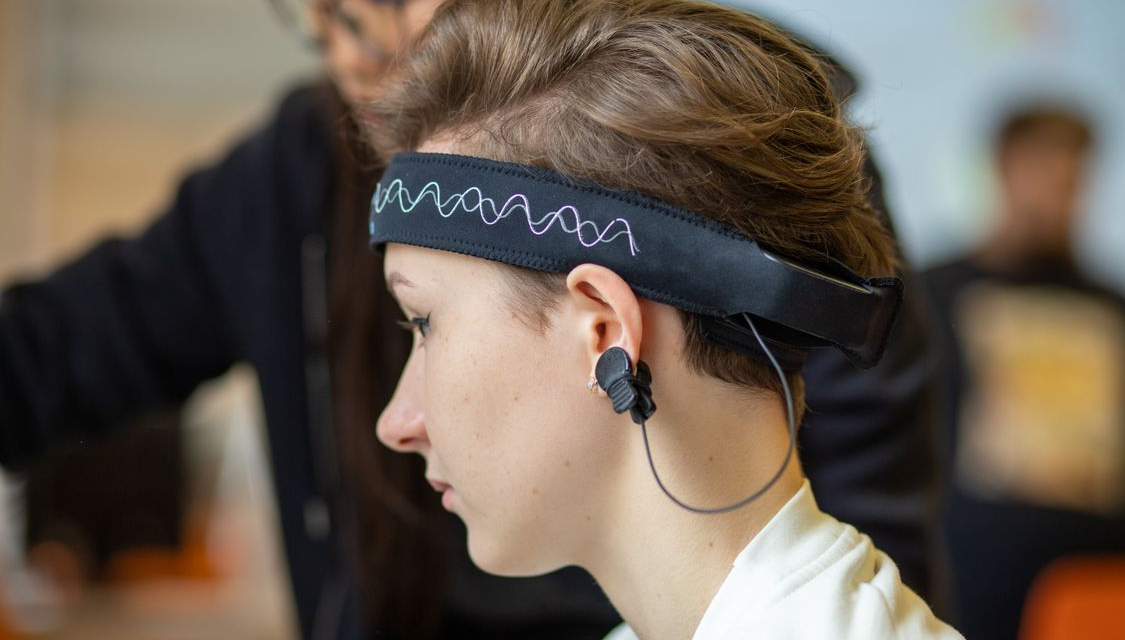
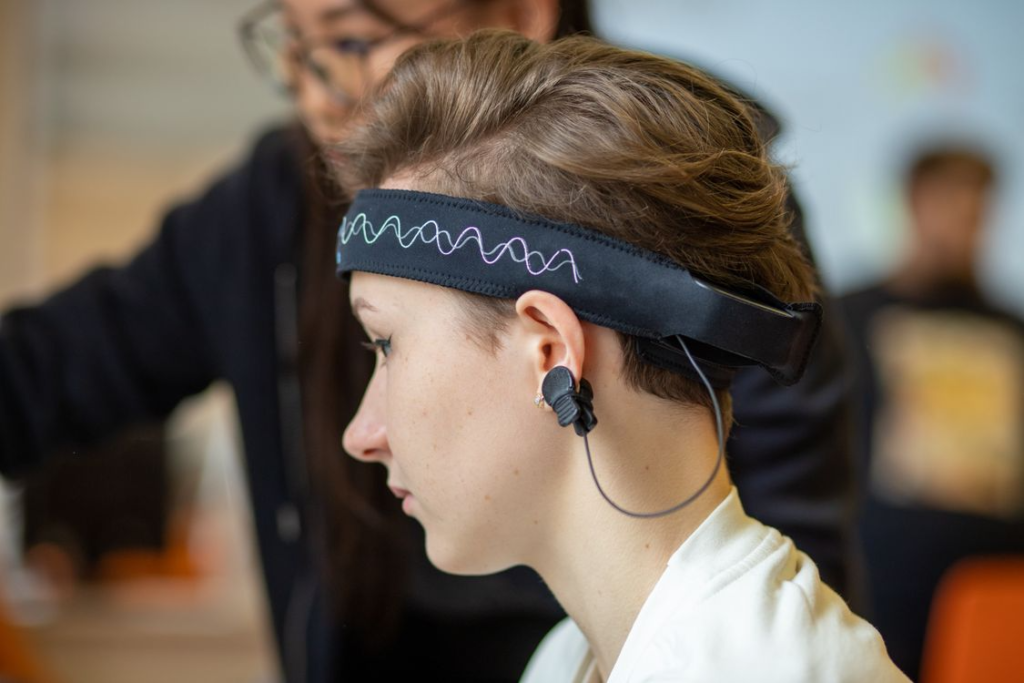
Muse Headband
Real-time EEG biofeedback that monitors your brainwave states during meditation and gives you instant audio feedback — making nervous system regulation measurable and learnable.Neurofeedback
💰 Budget tip
You don’t need expensive tech to start. The 7 techniques above require zero equipment and zero money. Wearables enhance the practice — they don’t replace it. Start with breathwork and cold showers. Track your subjective stress levels on a 1–10 scale in a simple notebook. That’s enough to begin.
Your Free 7-Day Nervous System Reset Plan
Don’t try to implement everything at once — that itself is stressful. Use this gentle, progressive plan to build a foundation for lasting nervous system health:
Day 1 – Awareness
Track your stress on 1–10 scale, 3x daily. No changes yet — just observe.
Day 2 – Breathe
5 minutes of box breathing morning + evening. Notice the difference.
Day 3 – Orient
Practice the orienting response 3x daily. Add morning humming (5 min).
Day 4 – Cold
Add a 30-second cold shower finish. Keep breathing through it.
Day 5 – Connect
Schedule one meaningful face-to-face or phone call. Phone away at dinner.
Day 6- Move
Try TRE shaking (10 min) + a 20-minute walk outside without headphones.
Day 7- Review
Compare your Day 7 stress scores to Day 1. Pick 2–3 practices to keep forever.
📌 Reminder
Nervous system regulation is a practice, not a cure. Like going to the gym, consistency matters more than intensity. Seven minutes of daily breathwork done consistently will outperform one hour of meditation done twice a month. Progress over perfection.
Frequently Asked Questions
How long does it take to regulate the nervous system?
Most people notice tangible changes in sleep quality and stress reactivity within 2–3 weeks of consistent daily practice. However, if your nervous system has been dysregulated for years, full retraining can take 3–6 months of consistent practice. The physiological sigh gives instant relief; deeper rewiring takes time.
Can I do neurowellness techniques if I have anxiety or PTSD?
Most techniques are safe and actually recommended for anxiety and PTSD. However, cold exposure and some somatic exercises can temporarily intensify symptoms in trauma survivors. If you have PTSD, start only with breathwork and orienting, and ideally work with a somatic therapist alongside self-practice.
What is HRV and why does everyone talk about it?
Heart Rate Variability (HRV) is the variation in time between successive heartbeats. A high HRV indicates a flexible, responsive nervous system that can shift between states easily. A low HRV indicates a system stuck in high-alert mode. It’s the most scientifically validated biomarker for nervous system health, and virtually all modern health wearables now track it.
Is neurowellness just mindfulness with a new name?
It’s broader. Mindfulness is one tool within neurowellness. But neurowellness also includes physical interventions (cold exposure, movement, breathwork), biological tools (wearables, biofeedback, vagal nerve stimulation), and social practices (co-regulation, community). It takes a whole-system approach that mindfulness alone doesn’t cover.
Can children benefit from nervous system regulation?
Absolutely — and research suggests the earlier, the better. Simple breathwork, outdoor play, physical touch, consistent sleep routines, and co-regulation with calm parents are among the most powerful investments you can make in a child’s long-term mental health and resilience.
Share this article🐦 Twitter/X📘 Facebook💼 LinkedIn📱 WhatsApp
WJ
WellnessJoyful Editorial Team
Health, Fitness & AI Wellness Experts · wellnessjoyful.com
We research and write evidence-based wellness content for busy professionals who want to live healthier, smarter lives. Every article we publish is backed by peer-reviewed science and real-world practicality — because wellness should be joyful, not overwhelming.
Ready to Reset Your Nervous System?
Get our free 7-day neurowellness starter kit, weekly science-backed tips, and the best AI wellness tools — delivered straight to your inbox.✉️ Subscribe FreeRead More Articles →